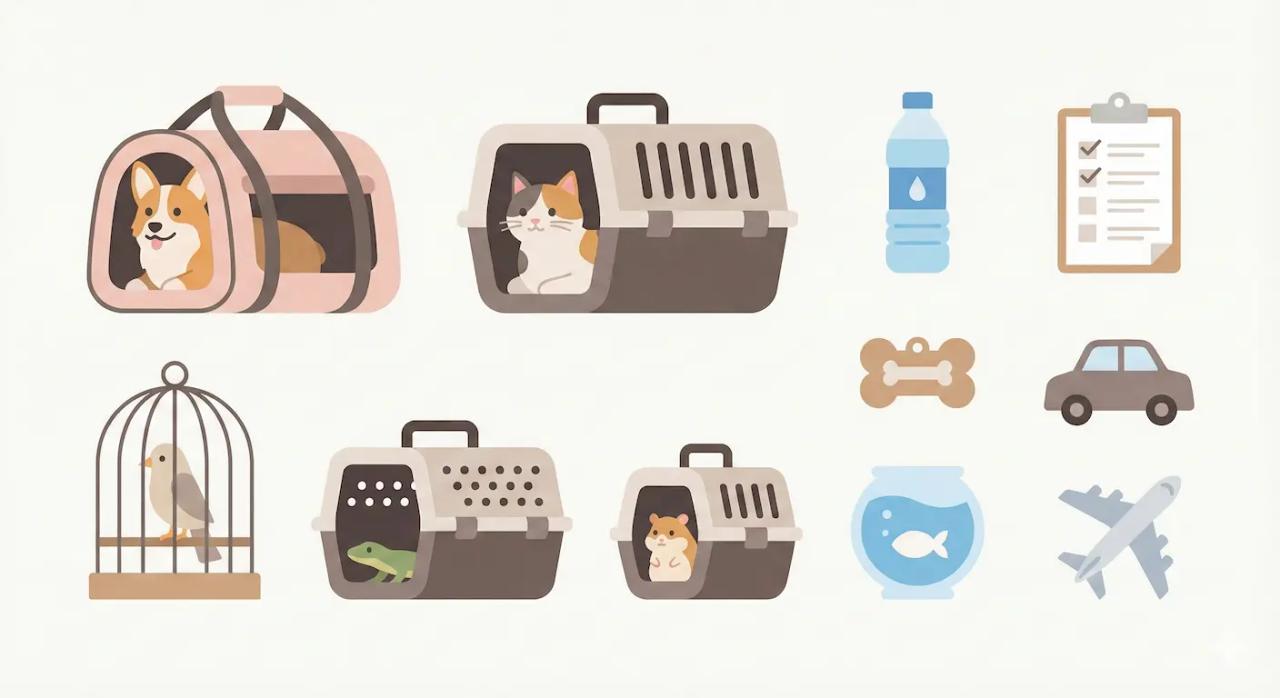
Pet Travel Safety Checklist
Road trip, quick vet dash, or a cross‑country flight—this grab‑and‑go checklist keeps your pet safe and comfy from door to destination. It’s practical, global, and beginner‑friendly (with mini tips for dogs, cats, birds, reptiles, small mammals, and fish).
Motto: Plan once, relax later.
The Core Checklist (Pack These First)
- Vet check & records: Recent exam; vaccines up to date; health certificate if required (border/airline). Keep paper + digital copies.
- ID everywhere: Collar + ID tag with current phone; microchip registered to your info; a recent photo of your pet.
- Carrier/crate that fits: Well‑ventilated, escape‑proof, and size‑appropriate (pet can stand, turn, and lie down). For flights, airline/IATA‑compliant.
- Restraint for the car: Back‑seat only. Use a crash‑tested harness clipped to the seat belt or a secured crate.
- Leash + harness: Clip before doors open at rest stops/airports.
- Food & water kit: Enough of the current food for the whole trip, collapsible bowls, bottled water, measuring scoop.
- Meds & first‑aid: Regular meds; basic kit (bandage/gauze/tweezers/antiseptic); 24/7 vet numbers along your route + at destination.
- Comfort items: Bed/blanket that smells like home; 1–2 favorite toys; calming pheromone (Adaptil/Feliway) if useful.
- Clean‑up kit: Waste bags, paper towels, enzyme cleaner, puppy pads; for cats—travel litter, scoop, disposable tray.
- Docs & permissions: Airline booking, pet reservation, import permits, vaccination proof, microchip number, hotel pet policy confirmations.
Car Trips (Short + Road‑Trip Rules)
- Secure in the back seat. No laps, no front airbags, no pickup beds. Windows cracked is fine; heads‑out is not.
- Heat/cold vigilance. Never leave pets in parked cars. Climate control on, sunshades up, frequent checks.
- Break cadence. Stop every 2–3 hours for water, sniffing, and bathroom.
- Meal timing. Light meal 3–4 hours pre‑departure; then feed at stops. Offer water at each break.
- Practice rides. Short, fun drives first; reward calm. Desensitize to turns, ramps, and fuel stops.
- Hotel hand‑off. Book pet‑friendly stays; walk first, then check in; room sweep for hazards before release.
Flying With Pets (Quick Essentials)
- Book early, read the rules. Confirm in‑cabin vs cargo, carrier dimensions, temperature/breed restrictions, and required documents.
- Crate prep. Sturdy, labeled (name/phone/“Live Animal”), lined with an absorbent pad, bowls attached. Acclimate weeks ahead.
- No routine sedation. Only if your vet advises and airline permits. Tired > sedated: exercise pre‑flight.
- Food & water. Light meal well before check‑in; hydrate. For in‑cabin, keep carrier under seat; for cargo, choose mild‑weather flight times.
- Airport flow. Harness/leash at security; use pet relief areas; keep carrier closed except where allowed.
- After landing. Retrieve promptly; water, potty, and a quiet decompression period.
Public Transport (Trains/Metro/Buses)
- Know the policy. Many systems allow small pets in carriers; some require muzzles for dogs. Check peak‑hour rules.
- Soft‑sided, close‑fit carriers help on crowded platforms. Stand near doors but out of the rush.
- Etiquette. Keep paws and carriers off seats; give people space; reward calm.
International Trip Snapshot
- Microchip + rabies. ISO microchip often required before rabies shot; check titer tests and timing.
- Health certificate. Country‑specific form, usually within 10 days of entry and sometimes government‑endorsed.
- Permits/quarantine. Some destinations (e.g., island nations) require import permits or quarantine—plan months ahead.
- Round‑trip thinking. Check re‑entry rules for your home country before you go.
Species‑Specific Quick Tips
Dogs
- Harness for security; chew or lick‑mat for stress relief; sniffy breaks beat marathon fetch mid‑trip.
Cats
- Top‑loading carrier; cover partially to reduce stimuli; pack travel litter + disposable tray; pheromone spray 15 min pre‑load.
Birds
- No PTFE/PFOA fumes (cookware/aerosols). Stable perch; cover three sides of the cage; steady temperature—avoid drafts.
Reptiles
- Secure enclosure with locks; maintain temps (heat packs/insulation as species‑appropriate); often skip feeding 24–48 h pre‑travel.
Small mammals (rabbits, guinea pigs, hamsters, rats)
- Quiet, darkened carrier; constant hay for herbivores; water bottle or hydro‑gel; chew‑proof everything.
Fish
- Short moves: double‑bag with tank water in a cooler; keep dark and insulated; battery air pump for longer trips. Flights: use specialized services and airline guidance.
Day‑Of Travel Timeline
- T‑48 h: Pack kit; confirm bookings; print digital backups.
- T‑12 h: Portion food; freeze water in a bowl for slow melt in crate (if applicable).
- T‑4 h: Exercise/potty; light snack only.
- T‑1 h: Pheromone spritz on bedding; calm crate time.
- Depart: Leash on before doors open; load pet last; final checklist glance.
- En‑route: Quiet praise; never open carriers outdoors.
- Arrival: Water, bathroom, decompression space; routine resumes.
Common Mistakes to Avoid
- Rushing crate training (equals panic later). Start early and go slow.
- New food on travel day. Stick to the usual diet to dodge tummy drama.
- Overheating at stops. Idling car ≠ safe car; plan human breaks around pet safety.
- Loose pets at doors. Clip the leash first—every time.
Frequently Asked Questions
Should I feed right before travel?
No—offer a light meal 3–4 hours beforehand to reduce nausea. Bring snacks for scheduled stops.
Is sedation safe for flights?
Generally discouraged. It can affect breathing and balance. Ask your vet about safer calming options and acclimate the crate instead.
How often should I stop on a road trip?
Every 2–3 hours for water, stretching, and bathroom.
What if my pet gets carsick?
Travel on a light stomach, keep air fresh, drive smoothly, seat them facing forward in a secured carrier. If needed, ask your vet about anti‑nausea meds.
My cat cries in the car—help?
Cover part of the carrier, play soft white noise, and use pheromones. Practice short rides with treats at homecoming.
What if my pet gets lost while traveling?
Microchip + ID tag + recent photo. Check shelters/vets nearby, post on local lost‑pet groups, and contact microchip registry immediately.
Try these tools
Pet Name Generator
Generate the perfect name for your new pet based on species, breed, and personality.
Try Now ->Instant Pet Age Finder
Find your pet's exact age instantly in days, weeks, months, and years. Perfect for tracking vaccination schedules and growth milestones.
Try Now ->Toxic Foods Checker
Quickly check which foods are harmful to your pet and read important safety tips.
Try Now ->