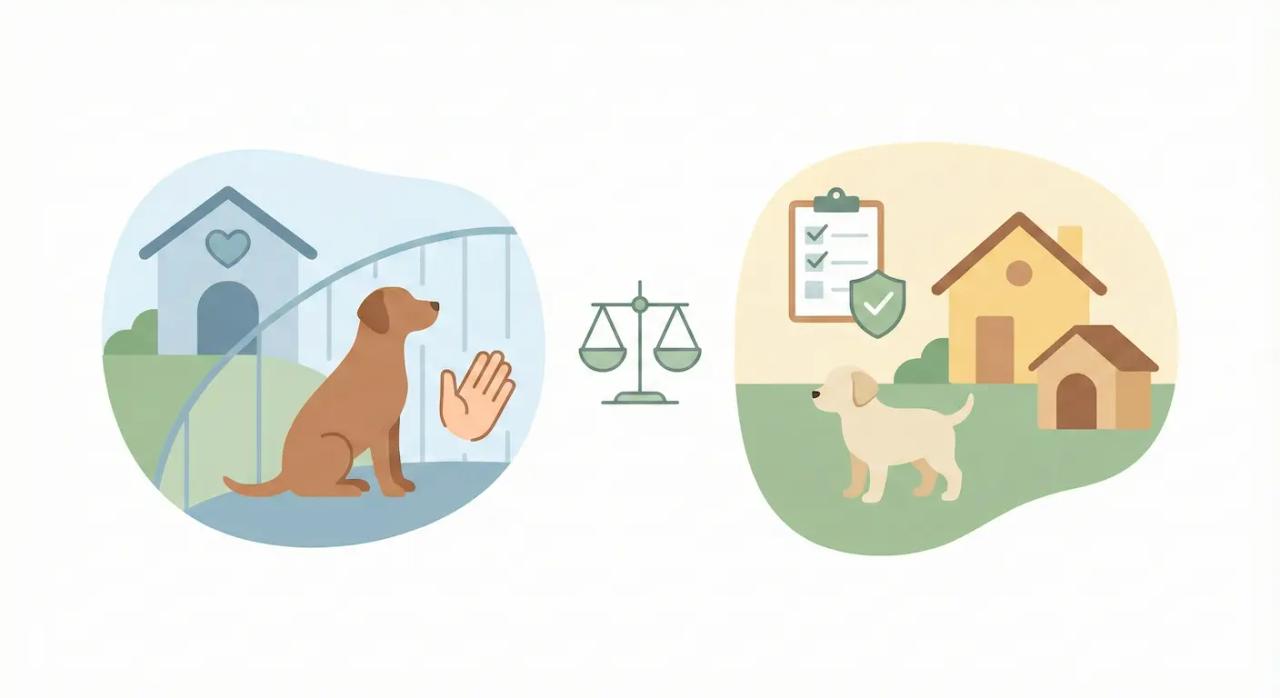
Why adoption is the default ethical choice
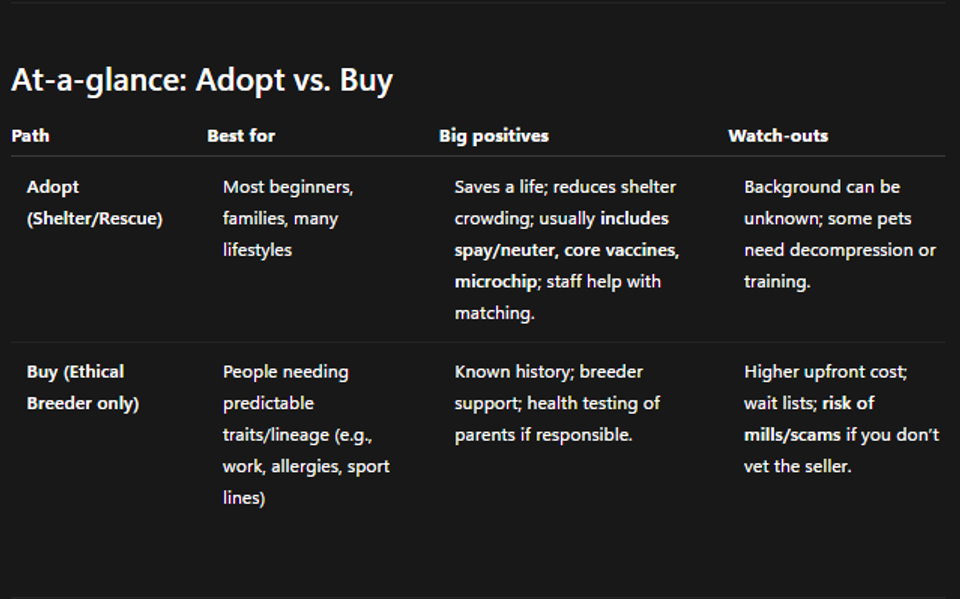
- Real lives saved: Adopting opens space for the next animal and supports overburdened shelters.
- Value that protects health: Reputable shelters typically include spay/neuter, core vaccinations, deworming, and microchipping in one affordable fee.
- Better for the system: Adoption avoids funneling money to inhumane mass‑breeding operations.
- Personality matching: Shelter teams help match energy level and temperament to your lifestyle.
When buying can be reasonable—and how to do it ethically
Sometimes you may need predictable traits (therapy/assistance work, sport lines) or known ancestry. If so, your responsibility is to find an ethical breeder.
Non‑negotiables of an ethical breeder
- Transparency & access: You can visit (or live‑video tour) the home/kennel, meet the dam (and ideally sire), and see where pups were raised.
- Health testing with proof: Parents have breed‑appropriate genetic/orthopedic screenings with documentation.
- Socialization & welfare: Puppies/kittens are raised cleanly in a home or home‑like setting with early handling and enrichment.
- Contract, guarantee & return clause: Written contract with clear health terms and a promise to take the animal back if life changes.
- They vet you, too: Expect questions about your schedule, home, plans; good breeders place, not just sell.
Expect limited litters and often a wait list—over‑supply is a red flag in itself.
Red flags: puppy/kitten mills and bad actors
Walk away if you see any of these:
- Won’t let you visit or meet the mother; pushes shipping or parking‑lot handoffs.
- Multiple litters/breeds always available; “add to cart” vibes; heavy sales pressure/discounts.
- Under‑age puppies (<8 weeks) or no real vet records.
- Urgent deposit requests; reluctance to share ID or verifiable health tests; stock photos.
Questions to ask any breeder
- Health testing: Which breed‑specific tests did both parents have? Can I see certificates?
- Veterinary care: What exams/vaccines/deworming has the litter had (from a licensed vet)?
- Early life: How were pups/kittens socialized (sounds, surfaces, handling, car rides)?
- Contract: Is there a written health guarantee? Return‑to‑breeder clause?
- Access: Can I visit the dam and see where the litter lives (or do a live video tour if distant)?
Practical decision flow (beginner version)
- Start with adoption: meet several pets; ask staff for a personality/energy match.
- If you still need specific traits, shortlist breeders meeting all five ethical checks above.
- Visit, verify, and walk away from any red flag. Your money should never fund cruelty.
Cost & care snapshot (first‑year reality)
- Adoption fees often bundle spay/neuter, core vaccines, microchip, and parasite control—value that can exceed the fee.
- Breeder purchase adds health tests, supplies, and the same vet work you must arrange if not included.
Whichever route you choose: plan a wellness exam, parasite prevention, quality diet, ID (microchip), and a simple training/enrichment routine from day one.
Frequently Asked Questions
Is adoption really safer than buying?
Safer for animal welfare—and often for your budget. Reputable shelters include core vetting and help match personalities.
Are most pet‑store puppies from mills?
Retail/online pipelines often source from high‑volume commercial breeders. Avoid third parties; meet the breeder and dam directly.
How do I avoid an online puppy scam?
Don’t pay deposits before meeting the pup and mum; verify ID and vet records; reverse‑image‑search photos; be wary of urgency.
What if I want a specific breed but still want to do good?
Check breed rescues first; many purebreds land in shelters. If buying, choose a breeder who meets every ethical standard above.
What about laws in my country?
Rules vary. Some regions ban third‑party puppy/kitten sales; wherever you are, insist on meeting the breeder and dam.
Try these tools
Instant Pet Age Finder
Find your pet's exact age instantly in days, weeks, months, and years. Perfect for tracking vaccination schedules and growth milestones.
Try Now ->Pet Name Generator
Generate the perfect name for your new pet based on species, breed, and personality.
Try Now ->Pet Breeding Age Calculator
Calculate your pet's breeding age based on their species, breed, and age.
Try Now ->