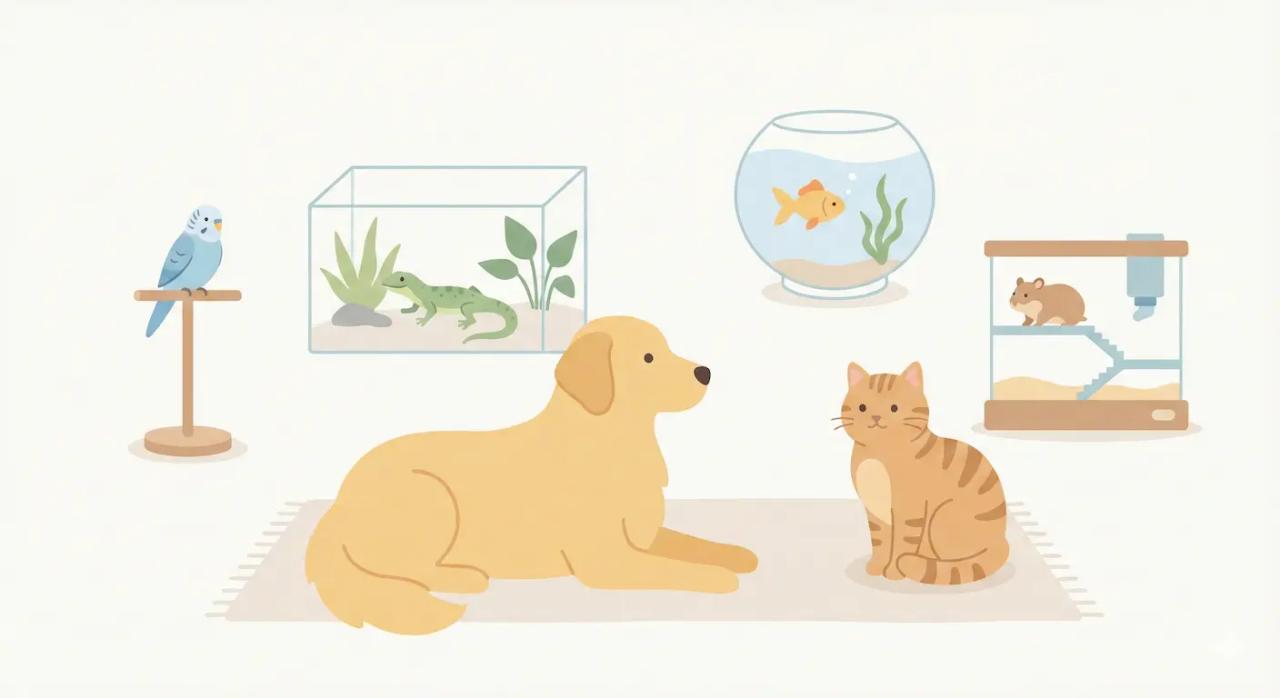
Building Harmony in Multi‑Pet Homes
More paws, more love… and sometimes more drama. 😅 The trick to a peaceful multi‑pet household is slow introductions, fair resources, and watchful humans. This guide gives you a calm, practical plan—from day‑one setups to long‑term peacekeeping—for dogs, cats, birds, reptiles, small mammals, and fish.
The Ground Rules (read these first)
- Go slow. Rushing first meetings creates grudges.
- Fair shares for all. Separate food, beds, litter boxes, and safe spaces.
- Body language > wishful thinking. Believe what you see, not what you hope.
- Supervise early & often. Earn freedom gradually.
- Ask for help early. Trainers, behaviorists, or vets can save months of stress.
Part 1 — Safe Introductions: A Step‑by‑Step Plan
1) Start Apart (Decompression Phase)
- New pet gets a quiet room/zone with their own bed, water, and bathroom setup.
- Resident pets keep routine access to the rest of the home.
- Swap scent first: trade blankets, toys, or use a soft cloth to rub cheeks/shoulders (cats) and share.
2) Positive Associations (No Contact Yet)
- Meal magic: feed on opposite sides of a closed door so “other‑pet smell = good things.”
- Calm soundtrack: soft voices, short visits; everyone gets treats for relaxed behavior.
3) Peek‑a‑Boo (Barrier Intros)
- Use a baby gate, door crack, or carrier view. Aim for short, boring sessions.
- Goal: quiet curiosity. End on neutral or positive notes; keep it brief.
4) Short, Supervised Meetings
- Dogs: on leash; neutral space if possible. Reward check‑ins with you.
- Cats: free in room with escape routes (vertical perches). No chasing allowed.
- Small pets/birds/reptiles: remain fully contained; visual only.
5) Expand Time & Territory Gradually
- Add minutes, then rooms. Keep resources duplicated (see Part 3).
- If tension rises, back up a step. Reps over heroics.
Pro tip: End every session while it’s still going well—so the last memory is “this is fine.”
Part 2 — Species‑Specific Playbooks
Dog ↔ Dog
- Parallel walk first (two handlers, few meters apart). Reward calm glances.
- Short sniff‑and‑go; no lingering stare‑downs. Leashes loose, tone light.
- Inside: remove high‑value toys at first; teach “place” or settle on beds.
Dog ↔ Cat
- Dog on leash; cat controls distance and escapes upward.
- Scent swaps → feed across door → gated visuals → brief room time.
- Interrupt fixations (soft name cue, treat scatter). Zero chasing, ever.
Cat ↔ Cat
- Scent swapping; room rotation (each cat explores the other’s space alone).
- Crack‑door peeks, then short supervised sessions. Several litter boxes (see Part 3).
- Add vertical territory (trees/shelves) to reduce crowding.
Predator ↔ Prey (birds / small mammals / reptiles / fish)
- Assume no face‑to‑face. Safety is architecture: solid enclosures, locked lids, away from paws and snouts.
- Birds: no aerosols/PTFE cookware; out‑of‑cage only in closed, pet‑free rooms.
- Fish: sturdy stand, secure lid, cords hidden; tanks out of pounce zones.
- Reptiles & small mammals: chew‑proof cables, latchable doors, quiet rooms.
Part 3 — Separate Essentials (Resource Peace Model)
Give every pet the basics, duplicated.
- Food & water: separate stations (ideally out of sight). Slow feeders for gulpers; raised bowls for large dogs if advised by your vet.
- Beds & hides: one per pet plus extra. Dogs: beds/crates in different rooms. Cats: add high perches and cozy caves.
- Litter boxes (cats): one per cat +1, in different locations, easy access, scooped daily.
- Toys: multiples of favorites; rotate to keep interest and reduce squabbles.
- Attention: 1:1 time with each pet—play, training, grooming—so no one feels replaced.
Part 4 — Reading the Room: Body Language 101
Early tension signs (intervene kindly):
- Dogs: still/stiff posture, hard stare, frozen tail, lip lift, low growl, “possession hover” over food/toys.
- Cats: tucked or twitching tail, ears sideways/back, pupils big, stillness before a swat, hiding/avoiding, urine marking. What to do:
- De‑escalate: calm voice, increase distance, redirect (treat scatter, name cue, toy toss).
- Reset: short break behind a gate/door, then try again later at an easier level.
- Never punish growls/hisses—they’re safety warnings. Thank them silently and give space.
Part 5 — Kids in Multi‑Pet Homes
- Teach the script: inside voices, slow hands, no chasing or hugging.
- The safe zone (crate, bed, perch, hide) is off‑limits to kids—always.
- Every interaction supervised for weeks, then gradually eased if all is calm.
- Assign gentle jobs: refresh water, measure kibble, 5‑minute play timer with wand toy (cats) or fetch (dogs)—with an adult present.
Part 6 — Keep the Peace (Long‑Term)
- Routines win: predictable meals, play, and sleep.
- Rotate enrichment: puzzle feeders, snuffle mats, foraging toys, scent games.
- Train tiny, daily: 3–5 minutes of cues or tricks builds focus and drains steam.
- Seasonal resets: new baby, move, holidays? Rewind to slower intros for a week.
Part 7 — When to Call in Reinforcements
Don’t wait for “World War Fur.” Seek help if you see:
- Repeated fights or injuries, escalating growls/hisses, resource guarding that won’t fade.
- Extreme stress (hiding all day, shutdown, persistent pacing/panting).
- Any bite/scratch that breaks skin.
Who to call:
- Veterinarian (rule out pain/medical causes; discuss meds if needed).
- Certified trainer (reward‑based; no aversives).
- Veterinary behaviorist/behavior consultant for complex cases.
Frequently Asked Questions
How long do introductions take?
Anywhere from days to weeks. Cats often need longer. Go by behavior, not the calendar.
Can two dominant personalities ever work?
Yes—with structure, outlets (training/enrichment), and clear management. Aim for peaceful tolerance, not sleepover besties.
My dog stares at the cat like a nature documentary—help?
Leash indoors, reward look‑aways and check‑ins, block with gates, increase distance. Zero chasing.
Do I really need extra litter boxes?
Yep. One per cat plus one prevents turf wars and “mystery puddles.”
Are group toy piles okay?
Not early on. Remove high‑value items during intros; reintroduce later under supervision.
Try these tools
Pet Name Generator
Generate the perfect name for your new pet based on species, breed, and personality.
Try Now ->Pet Cost Calculator
Estimate the lifetime cost of owning different types of pets.
Try Now ->Instant Pet Age Finder
Find your pet's exact age instantly in days, weeks, months, and years. Perfect for tracking vaccination schedules and growth milestones.
Try Now ->