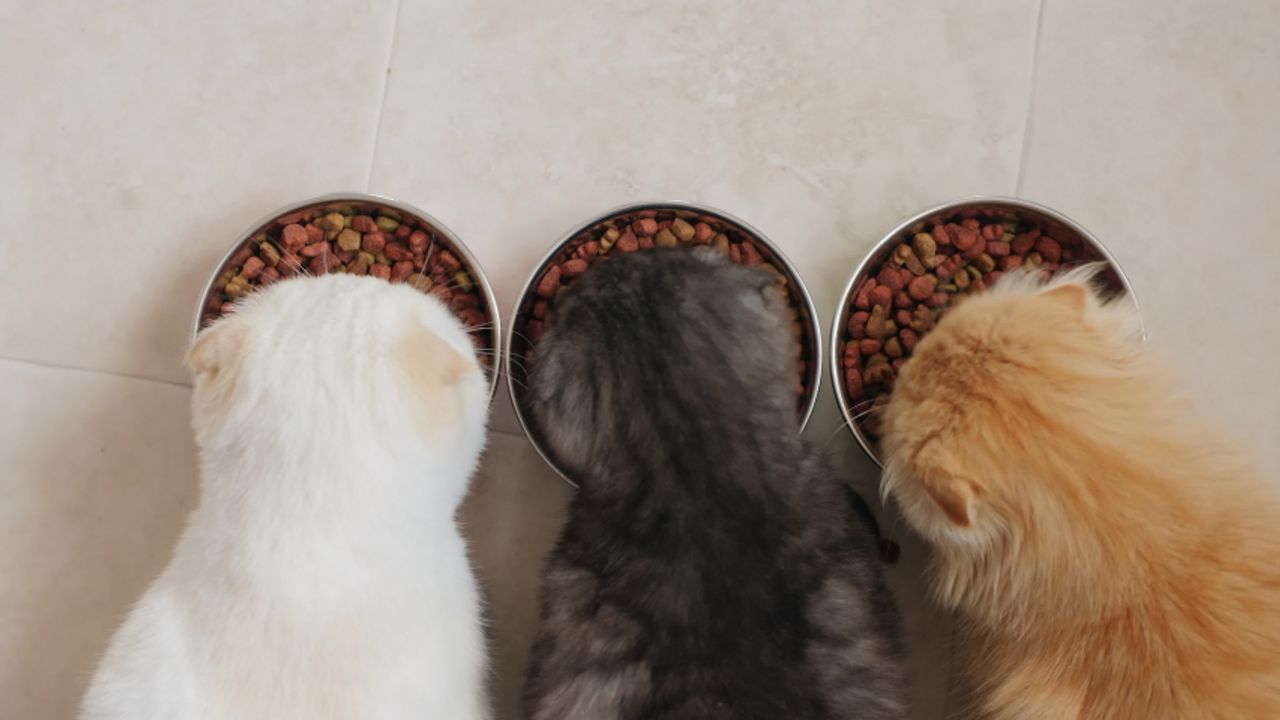
Cats are tiny, furry metabolic marvels. They’re obligate carnivores, built to thrive on animal protein and fat with very little carbohydrate, and they’re experts at convincing you they’re “literally starving” 10 minutes after dinner. Getting calorie intake right keeps your cat lean, lively, and purring for years to come. This guide makes the math simple, the choices practical, and the tone human—because you’re the one holding the scoop. 😼
Why Calories Matter for Cats (and nine lives)
Calories are fuel. The right amount:
- powers organs, muscles, and that 3 a.m. hallway sprint,
- maintains a healthy weight and muscle mass,
- supports immunity and overall longevity.
Too many → weight gain, joint and mobility issues, diabetes risk, lower quality of life. Too few → muscle loss, dull coat, fatigue, weakened immunity—and in cats, crash dieting is dangerous (risk of hepatic lipidosis). The goal is steady, appropriate energy matched to your cat’s size, age, and lifestyle.
The Big Four: What Actually Changes Calorie Needs
1) Age & Life Stage
- Kittens: turbocharged. They need 2.5–3× RER with 3–4 small meals/day.
- Adults: maintenance mode. Needs vary with activity and reproductive status.
- Seniors (≈10+ years): often less active; many need slightly fewer calories—but monitor closely, because some super-seniors start losing weight and need more (plus very digestible protein).
2) Weight & Body Composition
A 6 kg cat eats more than a 3 kg cat—but not double. Metabolic needs scale non-linearly (hence the RER exponent). Muscular cats burn more than pudgy, low-muscle cats of the same weight.
3) Activity Level
- Indoor nappers: lower end of the range.
- Active/outdoor: higher end; roaming, hunting, climbing = more fuel.
- Athletic unicorns: farm patrol, agility—sometimes well above indoor norms.
4) Health & Reproductive Status
- Neutered cats typically need a bit less than intact cats.
- Pregnant/nursing queens: ~1.5× RER late pregnancy; 2–3× (or more) in peak lactation.
- Medical conditions (thyroid disease, diabetes, GI issues): always feed under vet guidance.
The Math (without tears): RER → MER
Step 1: RER (Resting Energy Requirement)
Formula:
RER = 70 × (body weight in kg)^0.75
Quick shortcut (ok for 2–45 kg):
RER ≈ 30 × (kg) + 70
Example: 4.5 kg (10 lb) cat
Shortcut: 30 × 4.5 + 70 = 205 kcal (exponential gives ~200–215 kcal). That’s the resting baseline.Step 2: MER (Maintenance Energy Requirement)
Multiply RER by a factor that fits your cat:
- Indoor, neutered adult: 1.2–1.4 × RER
- Intact adult: ~1.4–1.6 × RER
- Active/outdoor: ~1.6–2.0 × RER (or more if truly athletic)
- Kittens: 2.5–3.0 × RER
- Weight loss: ~0.8 × RER (of ideal weight)
Example (cont.): 10 lb indoor neutered cat, RER ≈ 205 kcal MER ≈ 205 × 1.2 to 1.4 ≈ 246–287 kcal/day Many land happily around ~240–270 kcal/day. Monitor body condition and adjust.
Ballpark Daily Calories (starting points)
These assume neutered adults at moderate activity. Always fine-tune to your cat.
- 3 kg (6.6 lb): ~170–210 kcal
- 4 kg (8.8 lb): ~200–240 kcal
- 4.5 kg (10 lb): ~220–280 kcal
- 5.5 kg (12 lb): ~240–300 kcal
- 6.5 kg (14 lb): ~260–330 kcal
Indoor chill cat? Aim lower in each band. Outdoor parkour cat? Aim higher (or beyond).
Life Stage Deep-Dive
Kittens & Teens (0–12 months)
- Calories: Often 250–350+ kcal/day, scaled to size and growth rate.
- Frequency: 3–4 meals/day (tiny stomachs, huge energy).
- Food: Kitten-labeled, nutrient-dense; prioritize protein and essential fats.
Adults (1–9 years)
- Indoor adults: Many maintain at ~200–280 kcal/day.
- Active/outdoor: Commonly ~280–360+ kcal/day, depending on size/activity.
- Watch & tweak: Monthly weight checks + BCS (more on that below).
Seniors (10+ years)
- Often marginally fewer calories, more high-quality protein to protect muscle.
- Some super-seniors lose weight: investigate medically; consider more calories and highly digestible diets.
- Weigh monthly; small changes matter.
Special Situations
Overweight or Obese Cats
- Never crash-diet a cat. Aim for slow loss (≈1–2% body weight/week).
- Typical plan starts at ~80% of RER (ideal weight) or a carefully calculated vet plan.
- High-protein, lower-calorie diets, portioned meals, treat limits, and more play are your friends.
- Vet supervision is a must (risk of hepatic lipidosis if weight drops too fast).
Pregnant & Nursing Queens
- Late pregnancy: ~1.5× maintenance.
- Peak lactation: ~2–3× (even more with large litters).
- Feed ad lib kitten/growth food; water always available.
Active/Athletic Cats
- Outdoor hunters, barn cats, agility stars: upper MER range or above.
- If ribs become too easy to feel or weight trends down, increase.
- Emphasize protein to support muscle.
Food Types & Calorie Density (why the scoop size lies)
- Dry kibble: ~350–500 kcal/cup (some “light” kibbles near ~300; some rich kibbles >500).
- Wet food (3 oz / 85 g can): ~70–100 kcal (brand and recipe vary).
- Wet food (5.5 oz / 156 g can): ~140–200 kcal.
- Raw/home-prepared: wildly variable; work with a vet nutritionist for balance and portioning.
Translation: ¼ cup of kibble can be 100–130+ kcal—a big chunk of an indoor cat’s budget. With wet food, cats often eat multiple cans/day to hit the same calories (the water content helps with satiety and hydration).
Label tip: Find the “Calorie Content” line: “kcal/cup” (dry) or “kcal/can” (wet). This is the number you portion against.
How to Tell If You’ve Nailed the Amount
Forget the scale for a sec. Your cat’s shape tells the truth.
- Ribs: You should feel ribs easily with light pressure (not see them sharply).
- Waist (top view): Subtle inward curve behind the ribs.
- Abdominal tuck (side view): Slight upward slope behind the ribcage.
- Energy/coat: Alert, playful, shiny coat, normal appetite.
Too much: no waist, hard-to-feel ribs, round belly, lower activity. Too little: visible ribs/spine/hips, dull coat, lethargy or food obsession plus weight loss.
Do a Body Condition Score (BCS) monthly. Aim for 4–5 / 9. Snap a quick photo (top and side) each month—amazing how helpful that timeline is.
Real-World Portioning (the part that actually works)
1) Measure precisely
- Use a standard measuring cup or (best) a gram scale for dry food.
- For canned, note kcal/can and portion accordingly (e.g., 1.5 cans/day).
2) Pick a schedule
- Meals beat free-feeding for most cats. Try 2–3 set meals/day or a timed auto-feeder that dispenses small portions.
- Multi-cat homes: feed separately if one steals food or is on a plan.
3) Treats: the sneaky saboteur
- Keep treats ≤10% of daily calories.
- Subtract treat calories from meals (or use a few pieces of the regular diet as “treats”).
- Many cat treats are 1–3 kcal each; bigger soft treats can be 5–10+.
4) Adjust slowly
- Change by 5–10%, then reassess after 2–3 weeks.
- If weight/BCS creep up, nudge down; if they’re trending down (and you’re not trying to diet), nudge up.
5) Re-check with your vet
- Any medical changes, weight loss plans, pregnancy/lactation, GI issues, or odd appetite shifts → call your vet for a tailored plan.
Worked Examples (so the numbers feel real)
Example A: Indoor 10 lb (4.5 kg) neutered adult
- RER ≈
30 × 4.5 + 70 = 205 kcal - MER (1.2–1.4) ≈ 246–287 kcal/day
- If the dry food is 400 kcal/cup → 0.62–0.72 cups/day, split in 2–3 meals.
- If the wet food is 90 kcal/3 oz can → ~3 cans/day (270 kcal).
Example B: Active 10 lb outdoor cat
- Same RER ≈ 205 kcal
- MER (1.6–2.0) ≈ 328–410 kcal/day
- Dry 400 kcal/cup → 0.82–1.03 cups/day
- Wet 90 kcal/can → ~4–4.5 cans/day
Example C: 6 lb (2.7 kg) kitten
- RER ≈
30 × 2.7 + 70 ≈ 151 kcal - MER (growth 2.5–3.0) ≈ 378–453 kcal/day in 3–4 meals.
(These are starting points. Your cat’s actual sweet spot lives where body condition and energy look great.)
Common Calorie Mistakes (and easy fixes)
- Eyeballing portions → consistently overfeeding. Fix: measure (or weigh) every meal; pre-portion daily allowance.
- Believing the bag’s upper range → many labels overshoot for indoor cats. Fix: start low-to-mid in the range; let BCS guide adjustments.
- Forgetting treat calories → stealth surplus. Fix: cap treats at ≤10% and count them.
- Not adjusting for activity changes → weight creep (winter couch, new apartment, fewer stairs). Fix: drop intake a bit when activity drops, bump when play ramps up.
- Crash dieting an overweight cat → dangerous. Fix: slow, vet-guided loss with high-protein diet and play.
Frequently Asked Questions
How many calories should a 10 lb cat eat daily?
Most land around ~200–250 kcal/day if indoor and neutered; ~280–330+ kcal/day if quite active/outdoor. Start with the RER × factor method, then adjust to body condition.
Do indoor cats need fewer calories?
Yes. Less roaming = fewer calories burned. Indoor cats commonly maintain on the lower end of the ranges; outdoor/active cats need more.
Can I just follow the feeding guide on the bag?
Use it as a starting point, not destiny. Those guides are broad and often high for indoor life. Measure, monitor BCS, and adjust.
How many calories are in a 3-oz can of cat food?
Usually ~70–100 kcal. Check the label’s kcal/can. Many cats need 2–3 small cans/day if eating only wet food, depending on size and activity.
How can I tell if my cat is overweight?
You can’t feel ribs easily, there’s no visible waist from above, and there’s little to no tummy tuck from the side. Aim for BCS 4–5/9.
What’s the safest way to help my cat lose weight?
Vet-guided plan, measured meals, high-protein, lower-calorie diet, treats ≤10%, more play, slow loss (≈1–2% body weight/week). Never crash-diet a cat.
Should seniors always eat less?
Often, but not always. Many seniors are less active and do well with slightly fewer calories and excellent protein. Some super-seniors lose weight and need more. Weigh monthly and ask your vet.
Are raw or homemade diets better for calories?
They can work but vary wildly in calories and are often nutritionally unbalanced without expert formulation. If you go this route, use a vet nutritionist and track weight carefully.
Do treats really have to be ≤10%?
If you want consistent weight control and complete nutrition—yes. Keep it to ≤10% and subtract from meal calories, or use pieces of the regular diet as “treats.”
The Bottom Line
There’s no magic single number—there’s your cat. Use RER × factor to set a smart starting point, measure what you feed, cap treats, and let body condition be your compass. Tweak calmly, celebrate small wins (not with extra snacks 😅), and loop in your vet for weight loss, medical issues, or special life stages like pregnancy and nursing.
Do this, and you’re not just adding years—you’re adding better years of zoomies, sunbeams, and sofa snuggles. 🐾
Try these tools
Daily Calorie Calculator
Estimate the ideal daily calorie intake for your dog or cat.
Try Now ->Pet BMI Calculator
Calculate your pet's Body Mass Index to ensure they maintain a healthy weight.
Try Now ->Pet Hydration Calculator
Calculate your pet's daily water needs based on species, weight, activity level and environment.
Try Now ->