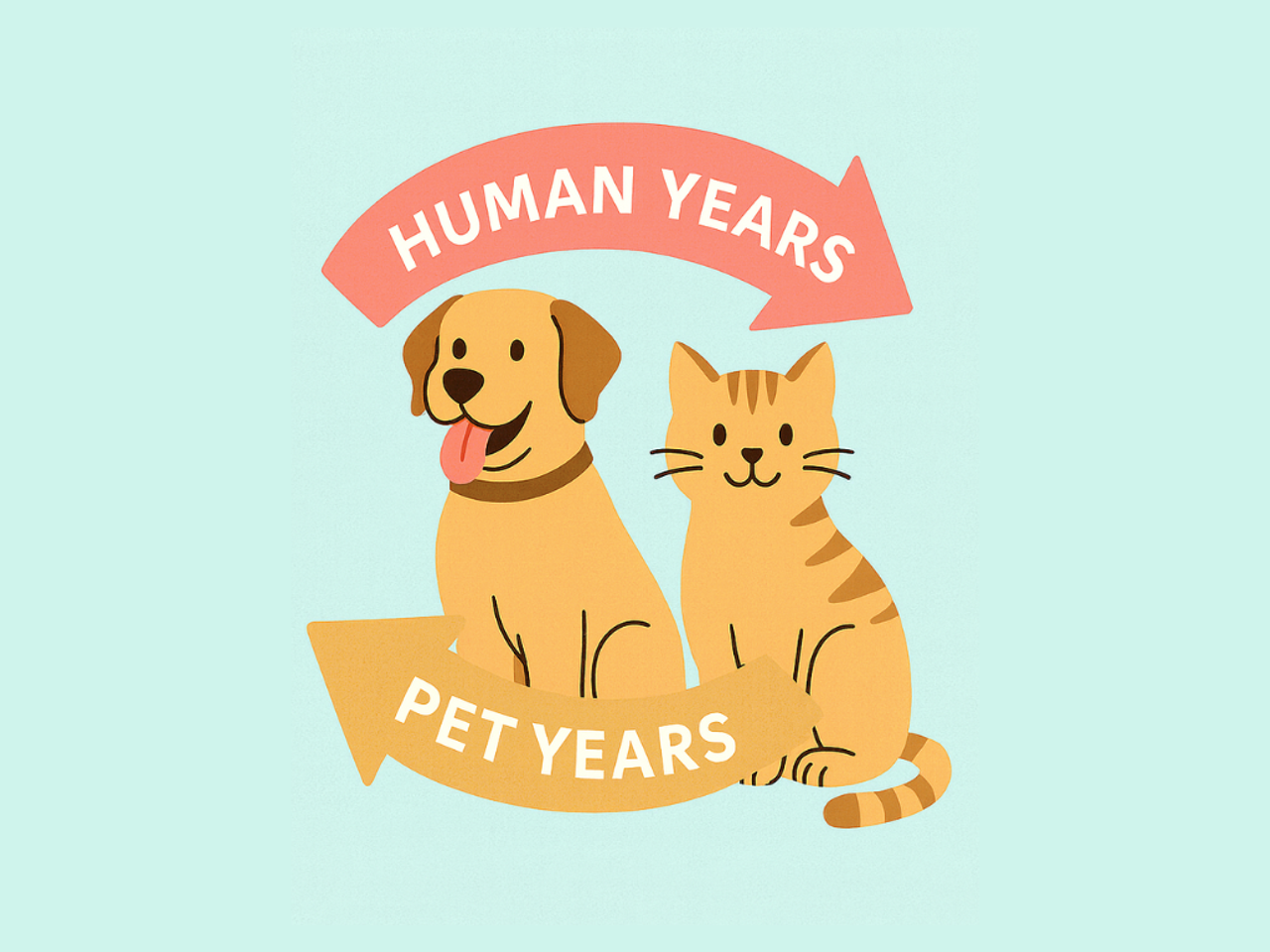
“How old are you really?” If pets could answer, they’d probably say: “Older than I look, faster than you think.” A kitten turbo-charges through childhood in months; a one-year-old dog is closer to a human teen than a first-grader; a five-year-old Labrador maps to late 30s–early 40s in human terms. The classic “one human year equals seven pet years” is tidy—but wrong. It can push owners toward the wrong food, exercise plans, and vet timing.
Veterinary guidance agrees on two truths: pets age non-linearly (fast early, steadier later), and dogs vary by size while cats are more consistent. Getting the curve right matters for everything from vaccines and dental care to joint support, weight control, enrichment, and expectations for behavior.
This guide translates the science into decisions you can use today.
How Pets Age: The Science Behind “Human Years”
Early sprint, later glide. Puppies and kittens complete most “childhood → teenager → young adult” milestones in the first two years. After that, aging becomes steadier year-to-year.
Dog vs. cat patterns.
- Dogs: Year 1 ≈ 15 human years; Year 2 ≈ 24; then add ~4–7 per year depending on size (small → fewer, giant → more).
- Cats: Year 1 ≈ 15; Year 2 ≈ 24; then +4 per year (cats are more uniform in size, so the curve is simpler).
Why the 1:7 rule fails. It assumes linear aging. But a one-year-old dog is not a human seven-year-old; biologically it’s closer to a teenager/young adult. Linear math ignores the early rocket-boost and the later plateau.
Why this matters. Accurate conversion aligns food, exercise, and vet care with true life stage—so you catch issues earlier and add quality years.
Dogs by Size: Small, Medium, Large, and Giant—Different Clocks, Different Care
Your quick mental model
- 1 year → ~15 human years
- 2 years → ~24
- Each year after 2:
- Small/toy (≤10 kg): +4/year; senior ~10–12; lifespan 14–16+
- Medium (10–25 kg): +5/year; senior ~8–10; lifespan 12–14
- Large (25–40 kg): +5–6/year; senior ~7–8; lifespan 10–12
- Giant (≥40 kg): +6–7/year; senior ~6–7; lifespan 7–10
What size means in practice
Pet-Human Age Calculator
Convert your pet's age to human years.
- Small/toy: Age slower; dental care is king; watch calorie creep.
- Medium: The “baseline” curve most charts use.
- Large: Earlier joint care, controlled impact activity, lean body condition.
- Giant: Plan senior care sooner; twice-yearly vet checks often make sense by 6–7.
Lifestyle multipliers
- Lean beats everything. Ideal body condition (4–5/9) adds healthy years.
- Movement matters. Regular, joint-friendly activity helps all sizes.
- Dental health. Untreated periodontal disease accelerates “functional aging.”
- Breed risks. Heart, cancer, or orthopedic predispositions shift when to screen.
Cats Decoded: Indoor Longevity, Consistent Curve, Senior Secrets
The simple cat curve
- 1 year: ~15 human years
- 2 years: ~24
- Each year after 2: +4 per year Senior often begins ~10–11; many indoor cats thrive to 15–18 (some 20+).
Why indoor cats live longer Fewer hazards (traffic, fights, infection) let them reach senior years. But longer lifespan means don’t skip senior care: kidney/thyroid monitoring, blood pressure checks, dental plans, and gentle weight management.
Cat comfort upgrades
- Easy-access litter boxes (low entry), warm beds, window perches.
- Hydration helpers (water fountains, wet food).
- Daily play bursts (wand toys, hunting games) to maintain mobility and mood.
Beyond Dogs & Cats: Rabbits, Hamsters, and Parrots at a Glance
Rabbits
- Typical lifespan 8–12 years; “senior” by ~5–7.
- Spay/neuter affects longevity (e.g., prevents uterine disease in does).
- Watch teeth (malocclusion), GI motility, and arthritis with age.
Hamsters
- Lightning-fast life: 2–3 years.
- By 1 year many are senior. Priorities: calm handling, safe enrichment, easy terrain.
Parrots
- Small parrots (budgies/lovebirds): 8–15 years.
- Large parrots (African greys, amazons, macaws, cockatoos): 25–50+ years.
- Ten-year-old large parrots are basically “kids”—enrichment and social/mental stimulation are non-negotiable.
Turn Numbers into Care: Calculators, Examples, and What to Change This Year
Quick Dog Converter (by hand)
- Start at 15 (Year 1).
- Jump to 24 (Year 2).
- Add per-year increment by size for each year > 2:
- Small +4 | Medium +5 | Large +5–6 | Giant +6–7
Examples
- 5-year-old Labrador (large): 24 + (3 × ~6) ≈ 42 human years.
- Do now: joint-aware exercise, lean diet, dental clean if due; consider baseline senior labs by 7–8.
- 12-year-old Chihuahua (small): 24 + (10 × 4) = 64.
- Do now: biannual senior exams, small-bite senior food, short/frequent walks, warm gear in cold.
- 8-year-old Great Dane (giant): 24 + (6 × ~6–7) ≈ 60–66.
- Do now: pain plan for arthritis, orthopedic bed, traction mats, cardiac screening discussion.
Quick Cat Converter (by hand)
- 3-year-old cat: 24 + 4 = 28 (adult in prime).
- 10-year-old cat: 24 + (8 × 4) = 56 (senior).
- 15-year-old cat: 24 + (13 × 4) = 76 (geriatric).
What to change at each stage
- Young adult: Portion control; daily play; baseline labs to set “normal.”
- Middle-age: Joint-friendly routines; dental cleanings; consider omega-3s; keep them lean.
- Senior: Twice-yearly checkups; kidney/thyroid (cats), BP, dental; ramps/low litter entries; softer bedding.
- Geriatric: Pain control as needed; hydration focus; frequent small meals; predictable routines.
Bonus: Add a “birthday ritual.” Each year, convert to human age, name the life stage, and update food, exercise, and screening reminders.
Advanced Factors That Shift “Functional Age”
Health Exceptions
- Orthopedics: Dysplasia/arthritis ⇒ treat exercise like an older athlete’s plan (low impact, surfaces with grip).
- Endocrine: Hyperthyroid cats act “younger” but need careful management; diabetic pets need strict routines.
- Cardiac/cancer prone breeds: Start conversations earlier about screening (e.g., Dobermans, Boxers, Goldens).
Climate & Environment
- Heat: Seniors and brachycephalics (Pugs, Frenchies, Persians) overheat easily—walk at cool hours, shade, water.
- Cold: Tiny/senior pets benefit from sweaters, shorter sessions, warm recovery spots.
- Air quality/altitude: Reduce exertion during smoke events or at elevation for heart/lung-fragile pets.
Enrichment = Brain Longevity
- Dogs: Scent games, food puzzles, trick refreshers, sniff-walks.
- Cats: Vertical space, hideaways, hunting play, puzzle feeders.
- Parrots/rabbits: Forage puzzles, safe chewables, social time. Short, varied, positive sessions keep seniors confident and mobile.
Training Across Life Stages
- Puppy/kitten: Socialization windows (sounds, surfaces, people).
- Adult: Maintain manners with micro-sessions (consistency > intensity).
- Senior: Bigger rewards, shorter sessions, hand signals if hearing fades.
The Big Lever: Weight
Extra kilos age joints and organs. Aim for BCS 4–5/9. Weigh food; re-check body condition monthly; adjust portions proactively.
Myths, Mistakes, and Special Cases You Should Know
Myth: “1 dog year = 7 human years.” Reality: Year 1 ≈ 15; Year 2 ≈ 24; then +4–7 depending on size/breed.
Pet-Human Age Calculator
Convert your pet's age to human years.
Myth: “All dogs age the same.” Size is destiny. Giants “age faster;” toys “age slower.”
Myth: “Indoor cats don’t need senior care.” They live longer because they’re indoors—so plan senior labs and dental care.
Mistake: Waiting for obvious symptoms. Pets hide pain. Age-based screening adds healthy years.
Mistake: Over/under-exercising seniors. They still need movement—just dial intensity and footing.
Special case: Mixed-breed dogs. Often live a bit longer on average due to genetic diversity. But size and body condition still rule.
Special case: Unknown-age rescues. Vets estimate via teeth/eyes/coat/muscle/behavior; place them in a life-stage plan and adjust as you learn more.
Frequently Asked Questions
Is the 7-year rule actually wrong?
Yes. Dogs and cats age fast early, then steadier. Use stepped formulas: Dogs 15 → 24 → +4–7/yr (by size). Cats 15 → 24 → +4/yr.
What’s the easiest dog formula after age two?
Small +4, Medium +5, Large +5–6, Giant +6–7 human years per calendar year.
How do I convert cat age quickly?
1→15, 2→24, then +4 per year. A 10-year-old cat ≈ 56 in human years; a 15-year-old ≈ 76.
Do mixed-breed dogs live longer than purebreds?
On average, slightly—genetic diversity helps. But size and leanness dominate outcomes.
Indoor vs outdoor cats—what changes?
Biology is similar; lifespan isn’t. Outdoor risks (traffic, fights, disease) slash average years. Indoors = safer, longer life to reach senior care stages.
When should I switch to “senior” food?
Dogs: giant 6–7, large 7–9, medium 8–10, small/toy 10–12 (or earlier if your vet flags joints/kidneys/weight). Cats: around 10–11, guided by vet and labs.
Can supplements reverse aging?
No. Some support joints/skin/coat, but nothing rewinds age. The proven stack: keep them lean, keep them moving, brush/clean teeth, and see your vet on schedule.
What are the oldest verified pet ages?
Dogs have reached ~30+ (extreme outliers). Cats ~38 (also extreme). Great stories—not typical expectations. dwadwadaw
How do I estimate a rescue’s age?
Teeth wear/tartar, lens changes, muscle tone, coat, behavior. Get a vet estimate, then manage by life stage with conservative screening.
What one habit adds the most healthy years?
Weight management. Ideal body condition quietly prevents a cascade of age-related problems.
Conclusion: Convert, Name the Life Stage, Make One Smart Change
Pet age conversion isn’t trivia—it’s a care map. When you replace the 1:7 myth with stepped, species-aware math, your decisions sharpen: you’ll time checkups better, feed for the right stage, choose joint-friendly exercise, and spot “I’m getting older” whispers before they shout. Dogs sprint early and diverge by size; cats jump to adulthood by two and then add ~4 human years per calendar year. Rabbits age into seniorhood by the mid-single digits; hamsters live fast and short; parrots play the long game.
Your move today: convert your pet’s age, name the life stage, and make one adjustment—book the wellness screen, trim portions 10%, add a daily scent game, lay a non-slip runner for an older dog, lower a litter box edge for a senior cat. Small, consistent changes stack into extra comfortable years.
If you want the quick route, pop your pet into our Pet → Human Age calculator, save the “human age” in your notes, and revisit it every birthday (or Gotcha Day). Same love, smarter timing—so they thrive at the age they truly are. 🫶🐶🐱🦜🐹🐰
Try these tools
Pet-Human Age Calculator
Convert your pet's age to human years.
Try Now ->Instant Pet Age Finder
Find your pet's exact age instantly in days, weeks, months, and years. Perfect for tracking vaccination schedules and growth milestones.
Try Now ->Dog-Wolf Similarity Calculator
Discover how closely your dog breed resembles its wild ancestor, the wolf.
Try Now ->